Explore the Bitcoin Price Prediction 2026 and beyond. Discover key factors, expert forecasts, and BTC’s potential trajectory to 2030. Bitcoin Price Prediction 2026? What will BTC price be in 2030?
Thinking about Bitcoin Price Prediction 2026? It’s a wild ride, for sure. Everyone’s talking about where it’s headed, especially with the next few years looking pretty interesting. We’re going to break down what might happen with the Bitcoin price in 2026 and then look way out to 2030. It’s not just about guessing numbers, though; we’ll cover the big things that could actually move the price, like new rules, big companies getting involved, and even those weirdly named ‘halving’ events. So, grab a coffee, and let’s figure out what’s up with Bitcoin.
- Key Takeaways
- Analyzing the Bitcoin Price Prediction 2026
- Potential Highs and Lows for BTC in 2026
- Impact of Macroeconomic Factors on 2026 Bitcoin Price
- Institutional Adoption and its Influence on 2030 Price
- Metcalfe's Law and Network Value by 2030
- Anticipated Bitcoin Price Range for 2030
- The Role of Halving Events in Price Appreciation
- Bitcoin as an Inflation Hedge and Store of Value
- Technological Advancements and Network Upgrades
- Bitcoin's Historical Performance and Market Sentiment
- Navigating Bitcoin's Price Swings
- Bitcoin as a Long-Term Investment Strategy
- Impact of US Regulatory Decisions on Bitcoin
- Growing Acceptance of Bitcoin as a Payment Method
- International Perspectives on Cryptocurrency Regulation
- Predictions from Industry Leaders for 2030
- Analysis of Bitcoin's Potential Beyond 2030
- Assessing the Likelihood of Bitcoin Reaching New All-Time Highs
- What's the big deal with Bitcoin Price Prediction 2026?
- Will Bitcoin's price jump by 2030?
Key Takeaways
- The Bitcoin price prediction for 2026 suggests a wide range, with some experts seeing it hit $178.2k while others place the low around $58k.
- By 2030, projections for Bitcoin’s price are significantly higher, with some analysts predicting it could reach $1 million or more, driven by institutional adoption and network growth.
- Factors like Bitcoin halving events, its role as an inflation hedge, and technological upgrades are expected to influence its long-term value.
- Bitcoin’s historical performance shows high volatility, making it a higher-risk investment that might be better suited for long-term strategies rather than short-term bets.
- Regulatory decisions, especially in the US, and the growing acceptance of Bitcoin as a payment method globally will play a major role in its future price.
Bitcoin Price Prediction 2026: Key Factors and Forecasts
Analyzing the Bitcoin Price Prediction 2026
Looking ahead to 2026, the crystal ball for Bitcoin’s price is a bit cloudy, but some trends are starting to take shape. We’ve seen Bitcoin go through some wild swings, and 2026 is likely to be no different. A lot hinges on how the broader economic picture develops. If inflation continues to be a concern, Bitcoin might get another look as a digital gold, a place to park value when traditional currencies are losing steam. The next Bitcoin halving, which happened in 2024, typically has a ripple effect that can extend into the following years, potentially boosting scarcity and, therefore, price.
Potential Highs and Lows for BTC in 2026
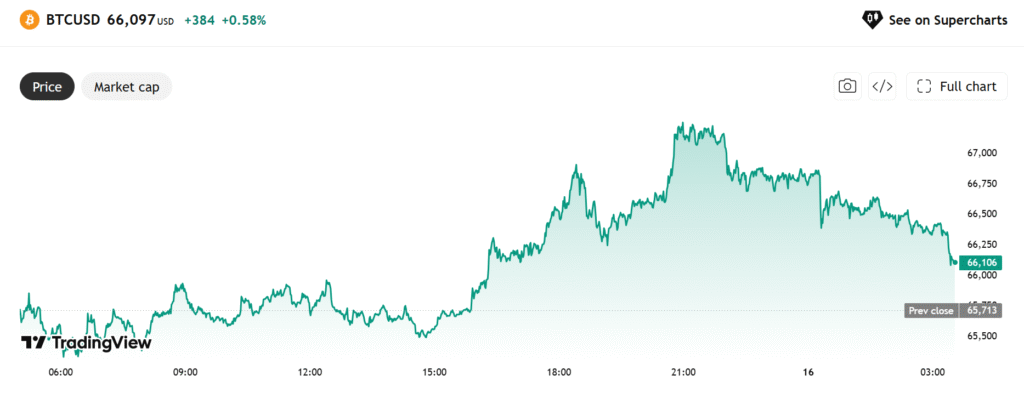
Forecasting exact numbers is always tricky business, but based on current trends and historical patterns, analysts are throwing around some interesting figures for 2026. Some see Bitcoin potentially hitting highs around $178,200, while others are more conservative, suggesting a floor closer to $58,800. The average price is often pegged somewhere in the middle, perhaps around $115,600. These are just estimates, of course, and real-world events can easily push prices in either direction.
Here’s a quick look at some projected ranges:
| Year | Potential High (USD) | Potential Low (USD) | Average (USD) |
|---|---|---|---|
| 2026 | $178.2k | $58.8k | $115.6k |
Impact of Macroeconomic Factors on 2026 Bitcoin Price
Macroeconomic conditions are going to play a massive role. Think about interest rates, inflation figures, and global stability. If central banks start cutting rates because inflation is under control, that could make riskier assets like Bitcoin more attractive. On the flip side, if there’s a global recession, investors might pull back from all assets, including crypto. We also can’t ignore geopolitical events; unexpected conflicts or major policy shifts can send shockwaves through financial markets, and Bitcoin isn’t immune to that. The interplay between monetary policy, inflation expectations, and investor sentiment will be key drivers for Bitcoin’s price performance in 2026. Any significant shifts in these areas could lead to substantial price movements, making it a year of both opportunity and risk for investors.
The Road to 2030: Bitcoin’s Projected Trajectory
Looking ahead to 2030, the path for Bitcoin seems to be shaped by a few major forces. We’re talking about how big companies might get more involved, how the network’s value could grow, and what the price might actually look like.
Institutional Adoption and its Influence on 2030 Price
The green light from the US SEC for Bitcoin ETFs has really opened doors. Some think this could lead institutions to put more than 5% of their portfolios into Bitcoin. This kind of money flowing in could be a big reason why BTC might hit some pretty high numbers by 2030. It’s not just one person saying this, either; big players in finance are looking at Bitcoin differently now.
Metcalfe’s Law and Network Value by 2030
There’s this idea called Metcalfe’s Law, which basically says a network’s value is tied to how many people use it. As more and more people get on board with Bitcoin, its network value should go up. Some analysts use this law to guess that Bitcoin could reach the $1 million mark by 2030, just based on how the network is expected to grow. It’s a pretty interesting way to think about how user growth translates to value.
Anticipated Bitcoin Price Range for 2030
So, what’s the actual number? It’s tough to say for sure, but many are looking at the upcoming halving events (which tend to boost prices) and the growing acceptance of Bitcoin as a digital store of value. The bullish projections that assume global adoption, and more institutional investment, places the possible price range at around $400k – $800k.
| Prediction Type | Estimated BTC Price (USD) |
|---|---|
| Maximum | $734.5k |
| Minimum | $467.2k |
| Average | $512.1k |
And if we assume conservative growth as seen in recent years, possible price could be at $160k in 2030. But again, this projection is based on assuming conservative growth that does not account for major adoption events.
It’s a wide range, showing just how much uncertainty there still is. But the general trend seems to be upward, driven by scarcity and adoption.
The increasing interest from large financial institutions, coupled with the inherent scarcity of Bitcoin due to its fixed supply and halving events, paints a picture of potential significant price appreciation by the end of the decade. While exact figures are speculative, the underlying factors suggest a strong upward trajectory.
It’s a lot to take in, but the general feeling is that by 2030, Bitcoin could be a much more established part of the financial world than it is today. We’ll have to wait and see how it all plays out.
Factors Shaping Bitcoin’s Future Value
The Role of Halving Events in Price Appreciation
Bitcoin’s built-in scarcity is a big deal, and the halving events are a major reason why. Think of it like this: every four years or so, the reward miners get for validating transactions gets cut in half. This directly reduces the rate at which new bitcoins enter circulation. The next halving is expected around April 2024, and historically, these events have often preceded significant price increases. It’s a supply shock, plain and simple. When the new supply shrinks, and demand stays the same or grows, basic economics suggests the price should go up. It’s a predictable, programmed scarcity that sets Bitcoin apart from traditional assets.
Bitcoin as an Inflation Hedge and Store of Value
Many people are starting to see Bitcoin as a digital version of gold. With its limited supply of 21 million coins, it’s designed to be resistant to inflation, unlike fiat currencies that governments can print more of. As economic uncertainty grows or inflation ticks up, some investors turn to Bitcoin as a way to protect their wealth. It’s not just about speculation; it’s about having an asset that’s expected to hold its value over the long haul, especially when traditional savings accounts aren’t keeping pace with rising prices. This perception is a major driver for its adoption and, consequently, its price.
Technological Advancements and Network Upgrades
Bitcoin isn’t static. The network is constantly being improved. Things like the Lightning Network, for example, are designed to make transactions faster and cheaper, which is a big deal for everyday use. When the network becomes more efficient and capable, it can handle more users and more transactions. This increased utility makes Bitcoin more attractive to a wider audience, from individuals to large businesses. Better technology means a stronger, more useful network, which can only help its long-term value proposition.
The ongoing development and adoption of layer-2 solutions and other network upgrades are critical for scaling Bitcoin’s capacity. These improvements aim to address transaction speed and cost, making the network more practical for a broader range of applications beyond just a store of value.
Understanding Bitcoin’s Volatility and Investment Potential
Bitcoin’s Historical Performance and Market Sentiment
Looking back, Bitcoin has shown some pretty wild price swings. We’ve seen it jump by thousands of percent over a decade, but also drop by tens of thousands in just a few months. It’s not for the faint of heart, that’s for sure. Market sentiment plays a huge role here; sometimes, it feels like the price is just reacting to whatever people are buzzing about online or what big companies are announcing. For instance, when major players started looking into Bitcoin ETFs, it definitely stirred things up.
Navigating Bitcoin’s Price Swings
So, how do you deal with these ups and downs? It really comes down to having a plan. You can’t really predict every move, but you can prepare for them. Think about it like this:
- Don’t invest money you need soon: Bitcoin’s price can drop fast. If you need that cash next week for rent, you’re going to be in a tough spot. Bitcoin Price Prediction 2026
- Diversify your holdings: Don’t put all your eggs in one basket. Having other investments means a big Bitcoin dip won’t wipe out your entire savings.
- Stay informed, but don’t panic: Bitcoin Price Prediction 2026, Keep up with what’s happening in the crypto world and the broader economy, but try not to make rash decisions based on short-term news.
Bitcoin as a Long-Term Investment Strategy
Many folks find that Bitcoin works best when treated as a long-term play. Instead of trying to time the market for quick profits, they focus on holding it for years. This approach aims to ride out the short-term volatility and potentially benefit from long-term growth. It’s not really a get-rich-quick scheme; it’s more about being patient and letting the asset mature.
The history of Bitcoin shows incredible growth, but it’s also been a bumpy ride. Understanding that volatility is part of the game is key. For many, the strategy involves holding onto Bitcoin for the long haul, accepting that there will be periods of significant price drops alongside potential surges. This patient approach is often seen as a way to manage the inherent risks associated with such a new and dynamic asset class.
Here’s a quick look at some historical data points:
| Period | Approximate Price Change | Notes |
|---|---|---|
| Last Decade | > 15,000% | Significant overall growth |
| Short Periods | Tens of thousands of $ | Rapid price drops and surges observed |
| End of 2025 | ~30% below ATH | Reflects recent market corrections |
Global Adoption and Regulatory Landscape
Impact of US Regulatory Decisions on Bitcoin
The United States has a big role to play in how Bitcoin and other cryptocurrencies are treated globally. For a while now, there’s been a lot of back-and-forth about how to regulate this new asset class. Think about the whole Bitcoin Spot ETF situation; it took a while for major players like BlackRock and Fidelity to get approvals after smaller firms were turned down. This kind of uncertainty can really make investors nervous, and it definitely affects Bitcoin’s price. Clearer rules from the US could lead to more mainstream acceptance and potentially a more stable market.
Growing Acceptance of Bitcoin as a Payment Method
It’s not just about investing anymore. More and more businesses are starting to accept Bitcoin directly for goods and services. While it’s not as common as using a credit card, you can find places that take it, especially online. This growing acceptance, even if it’s still a niche thing, adds to Bitcoin’s utility beyond just being a digital asset. It shows that people are finding real-world uses for it, which is a good sign for its long-term value. We’re seeing companies integrate crypto payment options, which is a step forward.
International Perspectives on Cryptocurrency Regulation
It’s not just the US. Countries all over the world are figuring out their own rules for crypto. Some places are really embracing it, making it easier for businesses and individuals to use. Others are taking a more cautious approach, with stricter rules. This patchwork of regulations can be confusing. However, there’s a general trend towards finding common ground on how to handle digital assets. Global crypto regulation is moving towards a more unified approach. Policymakers worldwide are finding common ground on fundamental principles and regulatory frameworks for cryptocurrencies. This international coordination is important for Bitcoin’s future, as it helps create a more predictable environment for everyone involved. It’s a complex picture, but things are definitely evolving. Bitcoin Price Prediction 2026
Expert Opinions on Bitcoin’s Long-Term Outlook
Predictions from Industry Leaders for 2030
When you look at what the big players are saying about Bitcoin’s future, especially by 2030, you see a lot of optimism, but with some important caveats. Some analysts, like Geoff Kendrick from Standard Chartered, have put out some pretty bold targets. He’s been talking about Bitcoin hitting $500,000 by 2030. His reasoning? He thinks that as more big institutions get involved, maybe through ETFs or direct investments, it’ll help smooth out those wild price swings we’re used to seeing. It’s like they believe the market will mature and become more stable.
Other forecasts are all over the map, but many lean towards significant growth. Some models even suggest prices could go well over $700,000, while more conservative estimates hover around $300,000. It’s a wide range, for sure, and shows there’s no single crystal ball.
Analysis of Bitcoin’s Potential Beyond 2030
Looking even further out, past 2030, the conversation gets a bit more speculative, naturally. The idea is that if Bitcoin continues to gain traction as a digital store of value, similar to digital gold, its potential is massive. Think about how many people and institutions still haven’t really gotten into crypto yet. As more people come around, and as the technology behind Bitcoin and other cryptocurrencies keeps improving, the network effect could really kick in. Metcalfe’s Law, which basically says a network’s value is proportional to the square of the number of users, could play a big role here. If the user base keeps growing, the value could theoretically skyrocket. Bitcoin Price Prediction 2026
Assessing the Likelihood of Bitcoin Reaching New All-Time Highs
So, will Bitcoin hit new all-time highs? Most experts seem to think so, but the timing and the magnitude are always the big questions. We’ve seen Bitcoin go through boom and bust cycles for years. The halving events, where the reward for mining new bitcoins is cut in half, have historically been followed by price surges. The next one is coming up, and many believe it will be a catalyst.
The increasing acceptance of Bitcoin as a payment method by businesses, coupled with the ongoing development of the Lightning Network for faster and cheaper transactions, suggests a growing utility that could support higher prices. Regulatory clarity, while still a work in progress, is also seen as a key factor that could unlock further institutional investment and, consequently, drive prices upward. Bitcoin Price Prediction 2026
Here’s a look at some potential price points based on different expert outlooks:
| Year | Low Estimate | High Estimate |
|---|---|---|
| 2026 | $75,000 | $100,000+ |
| 2030 | $300,000 | $500,000+ |
| 2040 | $900,000+ | $1,500,000+ |
It’s important to remember that these are just predictions. The crypto market is known for its volatility, and unexpected events can always shake things up. But the general sentiment among many industry leaders is that Bitcoin’s long-term trajectory is still pointing upwards, especially as it becomes more integrated into the global financial system.
What’s the big deal with Bitcoin Price Prediction 2026?
For 2026, experts think Bitcoin’s price could swing between $58,000 and $178,000. This range depends on big events like new rules for crypto and how
Will Bitcoin’s price jump by 2030?
Many believe Bitcoin could be worth around $734,500 by 2030, with some even guessing $1 million! This is because more and more big companies are getting into Bitcoin, and more people around the world are starting to use it.